 SYSTEM / 01
Subsea positioning
STAR-RTK
Locate underwater assets, position them and return directly to a known target using a portable acoustic positioning system.

Underwater positioning, agile robotics and motorised fibre-optic systems. Locate precisely, return directly to a target and operate with confidence.
FIND.
REACH.
ACT.
DIRECT TO TARGET.
Complementary systems designed for real subsea missions. Deploy them together or individually. One shared ambition: accurate positioning so you can go straight to the target.
SYSTEM / 01Locate underwater assets, position them and return directly to a known target using a portable acoustic positioning system.
 SYSTEM / 02
Portable and deployable from vessels of opportunity. A six-degree-of-freedom ROV for agile navigation, observation and remote operations from the surface.
 SYSTEM / 03
Miniaturised motorised fibre-optic reel with interchangeable 300–3,000 m spools, RJ45 connectivity and a 300 Mbps target data rate. Standalone system for IP-controlled ROVs.
STAR-RTK combines seabed acoustic transmitters, a GNSS-RTK surface reference and a miniaturised receiver on the underwater vehicle for georeferenced missions over extended areas.
Explore the mission components below STAR / FIELD DEPLOYMENT
A non-dedicated support vessel carries mission control, with data links to the ROV and reference buoy.
Place 3–4 seabed pingers around the work area.
Use the GNSS-RTK buoy for temporal synchronisation and georeferencing.
Compute positions onboard from measured acoustic arrival times.
Lightweight, portable and adaptable technology for real mission constraints, with no unnecessary complexity or cost.
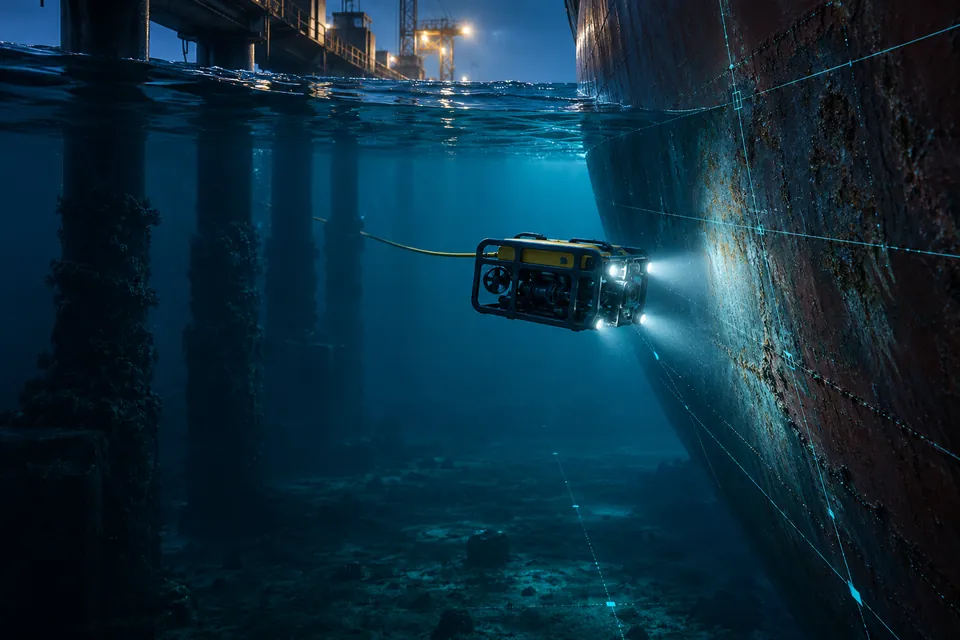
Inspect ships’ hulls, quays and harbour floors in a georeferenced workspace supported by acoustic positioning.
Discuss this mission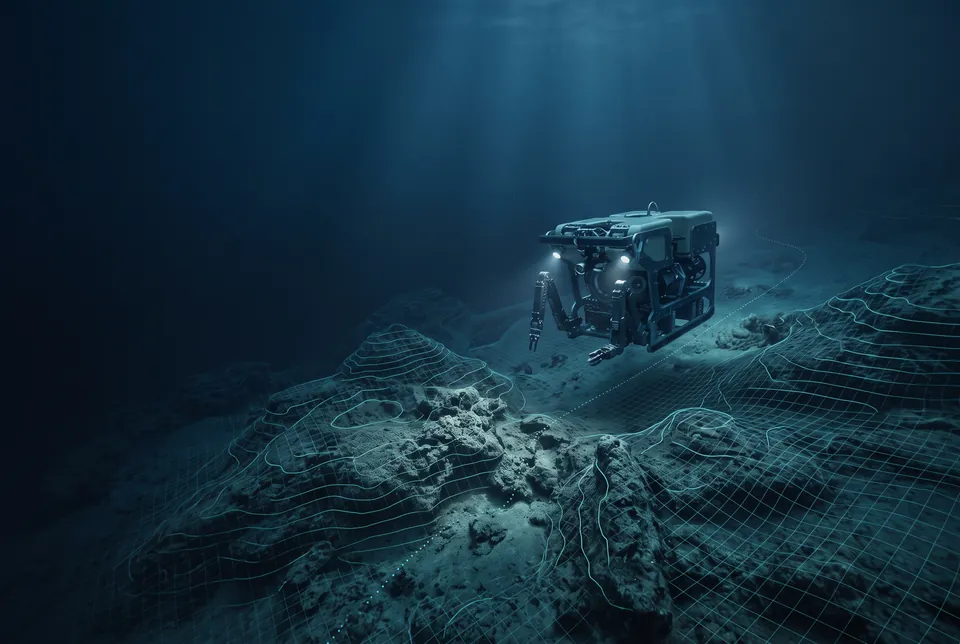
Support repeatable paths and georeferenced data acquisition across survey areas.
Discuss this mission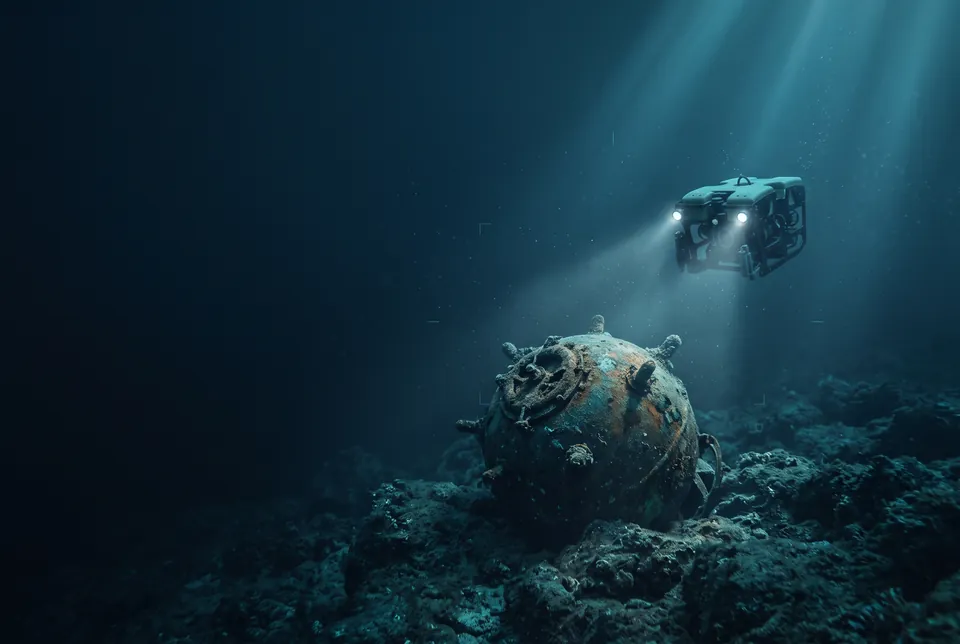
Support multi-vehicle underwater navigation where GNSS is unavailable or jammed, including demanding maritime-security operations.
Discuss this mission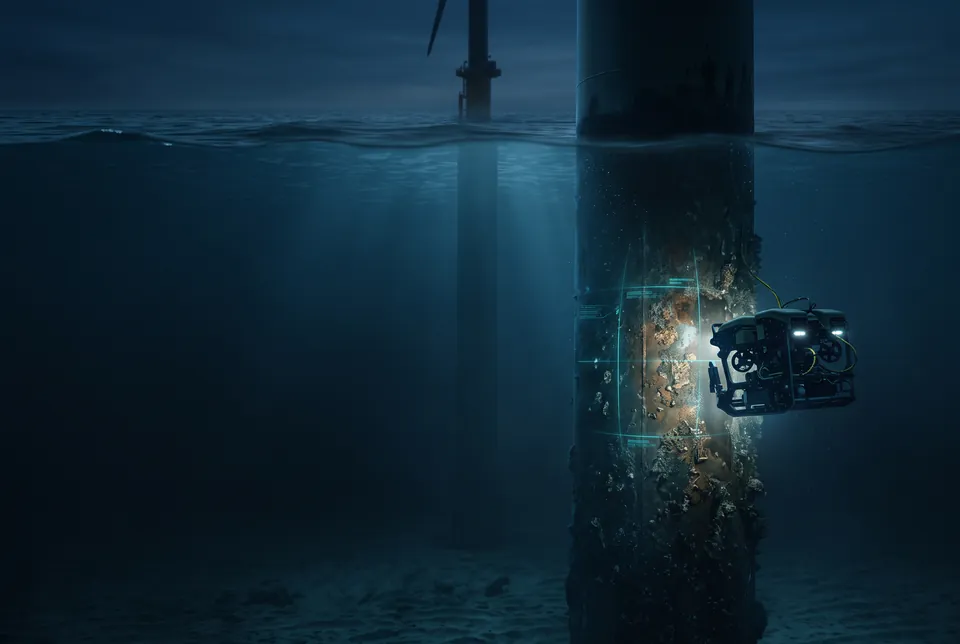
Assist subsea inspection and maintenance tasks around offshore installations.
Discuss this mission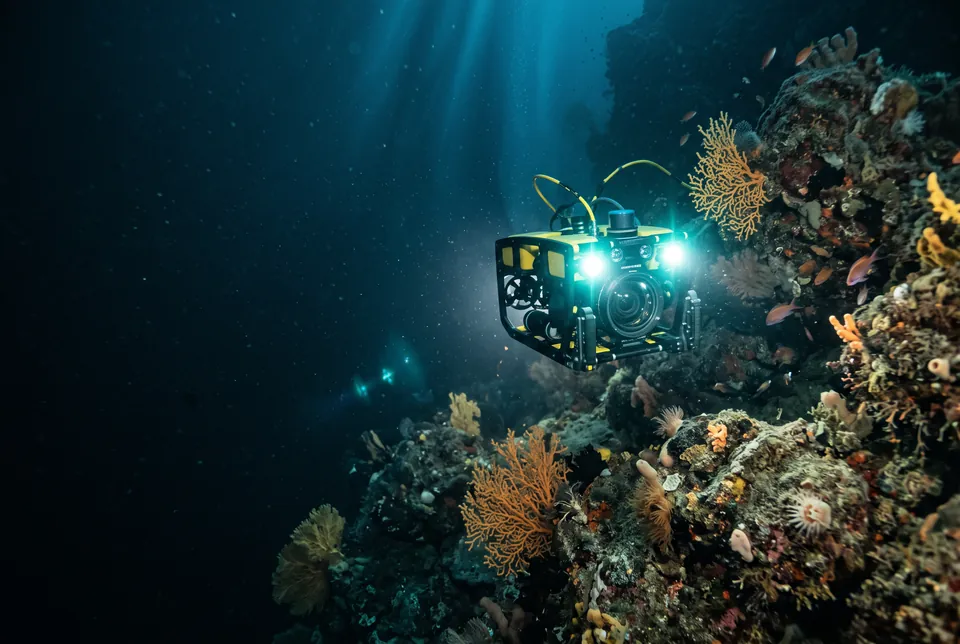
Help researchers investigate and document the underwater environment.
Discuss this mission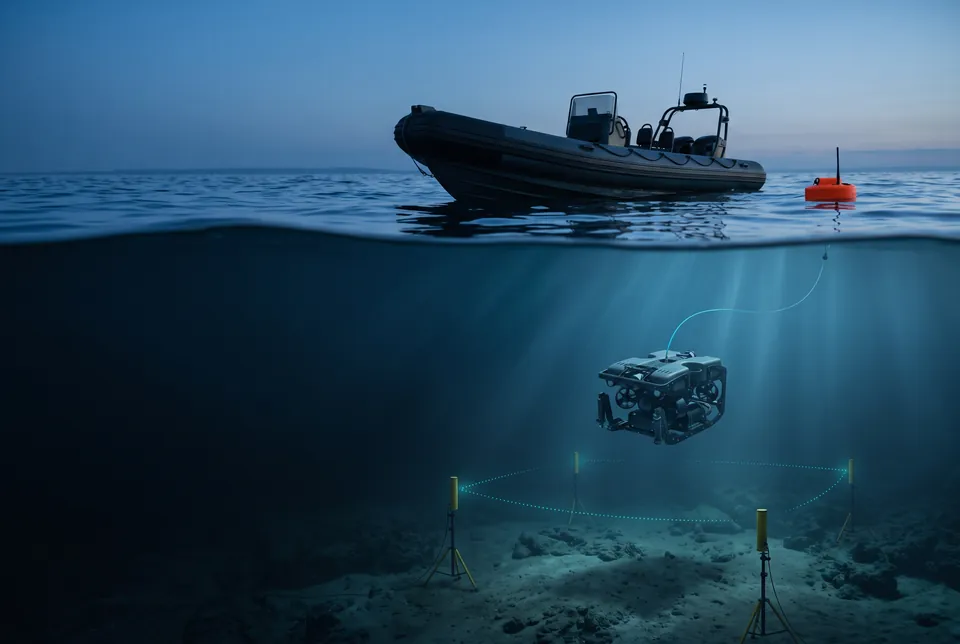
Adapt to available surface assets without designing an entire mission around a dedicated ship.
Discuss this missionOur design philosophy is simple: lightweight, portable and adaptable systems built around real-world operational constraints, not unnecessary complexity.
Georeferenced workflows from seabed mapping to return visits, target identification and intervention without unnecessary detours.
Modular components that adapt to different vehicles and complex mission requirements.
Lightweight systems designed for rapid deployment from vessels of opportunity, without prior field calibration.
Independent positioning, ROV and fibre-reel products with standardised digital interfaces.
STAR-FO combines a miniaturised motorised reel, SFP optical interfaces and single-mode optical fibre. Designed to pay out and rewind fibre under controlled tension, it offers plug-and-play RJ45 connectivity for compatible IP-controlled ROVs.
Spools 300–3,000 m · nominal mass 3 kg · 300 Mbps data rate: published design specifications to be confirmed.
Engineering insights grounded in maritime operations, mission preparation and accessible subsea technology. Article previews, not published studies.

Reference geometry and acoustic time-of-flight measurements in areas without underwater GNSS reception, avoiding dependence on an expensive fully instrumented vessel.
Explore the conceptMission preparation, portability and precise navigation are as important as raw specifications for cost-effective operations.
Explore our approachA compact motorised reel, standardised SFP optical interfaces and controlled-tension fibre handling for a reliable subsea link.
Explore STAR-FOAnswers about mission integration, technical design targets and interoperability.
STAR-RTK provides underwater positioning data, while STAR-ROV is an underwater robotic vehicle. They can be considered together for mission workflows, or assessed separately depending on project requirements.
No dedicated vessel is envisaged. Portable pingers, a surface reference and a mission-control data link can be deployed from a suitable vessel of opportunity, subject to sea conditions and local operating constraints.
No. STAR-FO is an independent motorised reel with SFP optical interfaces and RJ45 Ethernet connectivity, intended for IP-controlled ROVs. Integration still depends on mechanical, power and interface compatibility.
Not necessarily. Some figures, including range, depth, weight and data rate, are stated targets or design specifications. Confirmed qualifications and sea-trial performance must be identified separately.
Yes. STAR is positioned for exploratory technical discussions and tailored field demonstrations. Use the contact form below to provide the mission context.
Tell us what you need to accomplish underwater. We’ll explore the right technical approach together.